GWRS Home  


Questions & Answers


Groundwater Replenishment System water will be drought proof and will provide three to four years of drought protection for Orange County.

Q:   What is the Groundwater Replenishment System?

A:    The Groundwater Replenishment (GWR) System is the largest water purification project of its kind in the world and will help increase Orange County’s water independence by providing a locally controlled, drought-proof supply of safe, very high-quality water. The GWR System takes highly treated sewer water and purifies it to near-distilled quality using state-of-the-art technology.

Completed and on line in January 2008, the GWR System generates enough pure water to meet the needs of 500,000 people. GWR System water exceeds all state and federal drinking water standards and has water quality similar to, or better than, bottled water.


Q:    What happens to the purified water? 

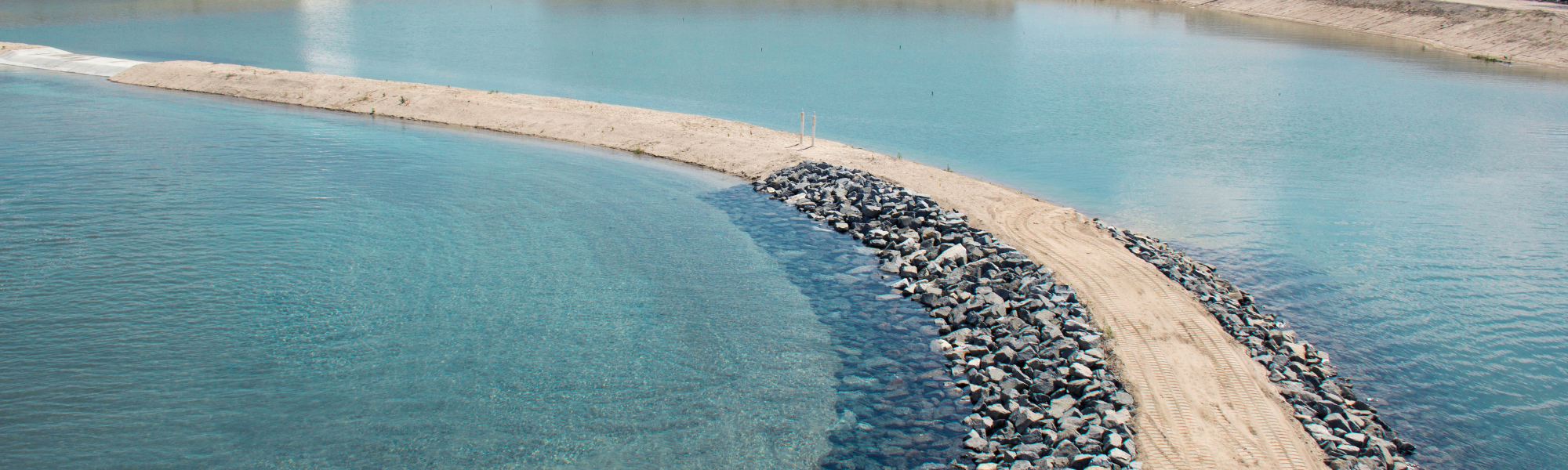
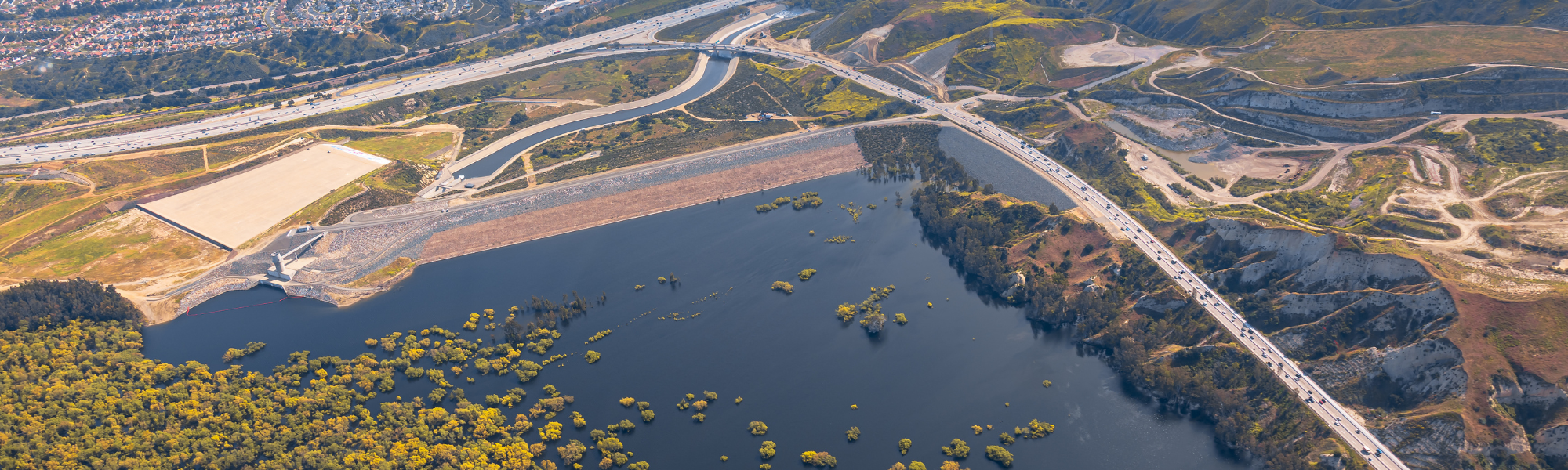
A:     Roughly half of the purified water from the GWR System is injected into Orange County’s expanded seawater intrusion barrier. The remaining water is piped to percolation basins, or large lakes, in Anaheim where the water takes the natural path of rainwater as it filters through clay, sand and rock down to deep groundwater aquifers. There, the water blends with the existing groundwater before it is used as a source of drinking water for northern and central Orange County residents.


Q:    What is a seawater intrusion barrier? 

A:     The seawater intrusion barrier is a mound of purified water injected under pressure along the western boundary of Orange County’s groundwater basin. Because the basin is naturally connected to the ocean, this dam of pressurized pure water prevents saltwater from contaminating Orange County’s groundwater. 

The original seawater intrusion barrier was built in the 1970s and the GWR System predecessor, world-renowned Water Factory 21, provided the purified water that was injected into the groundwater basin. The original system of injection and monitoring wells that was part of Water Factory 21 was expanded as part of the GWR System project in order to provide added protection from saltwater intrusion.


Q:    How does the GWR System purify water? 

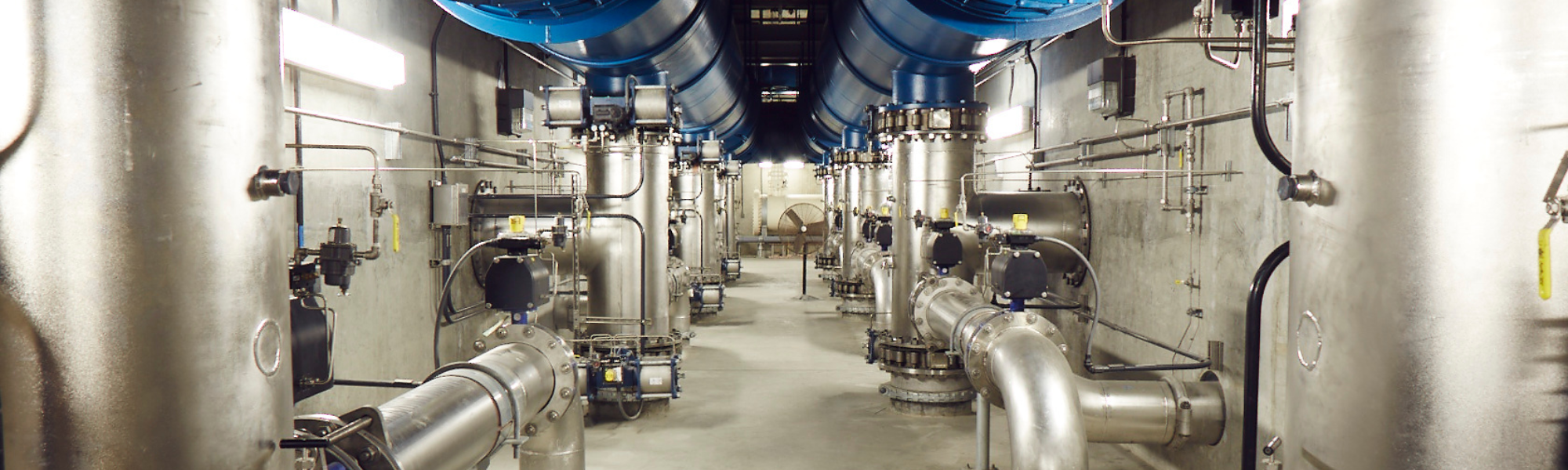
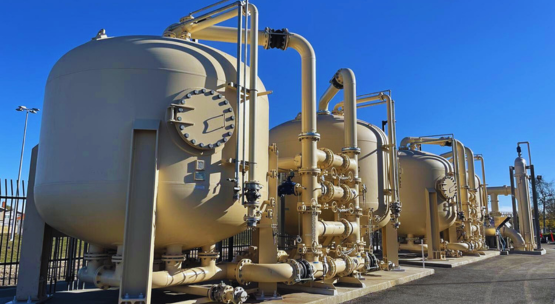
A:     The GWR System takes highly treated sewer water and purifies it using a state-of-the-art, three-step process – microfiltration, reverse osmosis, and ultraviolet light with hydrogen peroxide disinfection. The water produced is so pure that it cannot be transported until minerals are added back into the water.

The resulting purified water provides a locally controlled, drought-proof source of water and is of higher quality than water sources currently used to recharge the groundwater basin.  Most of the drinking water for northern and central Orange County is drawn from the groundwater basin.  


Q:    What is microfiltration? 

A:    Microfiltration is a low-pressure membrane process that prepares the water for the next treatment step of reverse osmosis. Microfiltration removes bacteria, small suspended particles, protozoa and any viruses attached to these constituents.

The same microfiltration technology also is used by commercial industries to process baby food, fruit juices and soda beverages; purify water for microchip manufacturing; and to sterilize medicines that cannot be heated. 


Q:     What is reverse osmosis? 

A:      Reverse osmosis is a high-pressure membrane process that forces water through the molecular structure of a reverse osmosis membrane.  The membrane separates out minerals and pollutants, including salts, viruses, pesticides and other materials, but allows water molecules to pass through. Many bottled water companies use reverse osmosis because of its proven purifying capability.


Q:     What is ultraviolet light and hydrogen peroxide disinfection? 

A:     During the third treatment process, water is exposed to ultraviolet light and hydrogen peroxide. This step provides extra assurance that no unwanted contaminants will remain in the purified water. Ultraviolet light is similar to what is used in hospitals and dental offices to sterilize instruments.


Q:      Why is the GWR System needed? 

A:       Water is needed to expand the seawater intrusion barrier and to help provide a new, reliable source of water to address projected future water shortages and to lessen Orange County’s dependence on imported water supplies.

The additional water source will also help Orange County Water District better manage the groundwater basin for both water quantity and quality. Blending this source of purified water with other sources of groundwater will help counteract the mineral buildup in the basin.

The GWR System also uses a valuable resource in an arid region and reduces the amount of wastewater being sent to the ocean. The purification process can be replicated in other arid coastal regions of the world to address a looming global water crisis.


Q:      How is the GWR System environmentally responsible?

A:       It uses a valuable and increasingly more taxed resource—water. Not only does the GWR System provide a reliable, drought-proof source of pure water for Orange County, it reduces saltwater pollution into Orange County’s groundwater basin and reduce the amount of wastewater discharged to the ocean. In fact, it reduces the amount of wastewater discharged to the ocean so much that it will delay, possibly indefinitely, the need to build another ocean outfall pipe.

A number of environmental groups, including the Surfrider Foundation, Orange County Coastkeeper, Sierra Club, Association of Environmental Professionals and Earth Resource Foundation are in support of the project. The GWR System is also a 2004 Flex Your Power efficiency award winner.


Q:     Where is the GWR System located?

A:     Completed in late 2007, construction of the GWR System began in 2003. Planned since 1994, the System consists of three major components: the Advanced Water Purification Facility (AWPF), a 13-mile pipeline connecting the AWPF to OCWD’s groundwater recharge basins, and the expansion of the existing seawater intrusion barrier with additional injection and monitoring wells.

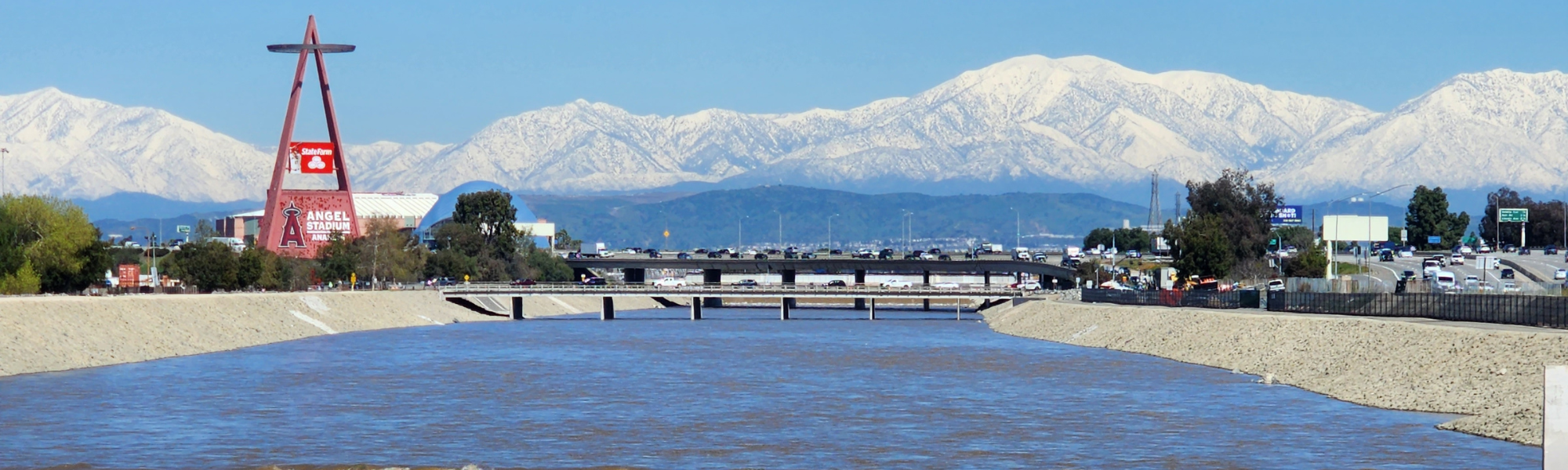
The AWPF is built on an existing water campus in Fountain Valley, Calif. The pipeline was placed in the west levee of the Santa Ana River between Fountain Valley and Anaheim, Calif. Pipeline construction occurred in Anaheim, Fountain Valley, Garden Grove, Huntington Beach, Orange and Santa Ana. New injection and monitoring wells were constructed in the cities of Fountain Valley, Huntington Beach and Anaheim.


Q:     What if we need more water?

A:      Another benefit of the GWR System is that, if needed, it can be expanded in future years.


Q:      What about desalination?

A:       Desalinated water costs range anywhere from $800 to $2,000 per acre-foot to produce, while the GWR System can produce purified water for approximatey $550 per acre-foot. Still, desalination will be a source of new water in areas where it can provide a backup supply of water to enhance reliability. 

The GWR System and desalination efforts will complement each other. The reality is that Southern California’s water future is not in the hands of one project or one technology. It will require a combination of many local and regional water projects, with efforts by all water agencies in Orange County and Southern California to meet future water needs.


Q:      How much did the GWR System cost?

A:      It cost $480 million to build the first phase of the project, or enough water for 500,000 people. 


Q:      Who paid for the GWR System?

A:      A mix of federal, state and local funding is being used. Grants of $92.5 million were secured, which includes $37 million from the State Water Bond (Proposition 13) approved by California voters in 2000, plus $30 million from the California Department of Water Resources, $20 million from the U.S. Bureau of Reclamation and $5 million from the State Water Resources Control Board awarded in 2002. The California Energy Commission, Environmental Protection Agency and Metropolitan Water District of Southern California have granted additional funds.

The California Energy Commission provided a $700,000 grant for the GWR System because it can produce purified water using one-half the energy required to transport water from Northern California to Southern California.  Other grants and funding are also being sought. 

Additionally, in 2007, OCWD began receiving an annual subsidy of $3.7 million for 23 years from the Metropolitan Water District of Southern California (MWD), which will help bring down the operating costs of the GWR System.  The financial incentives lower the cost of water to approximately $550 per acre-foot, which is about the same cost of imported water. In January 2008, the project received six awards from Southern California Edison totaling $421,432 for incorporating energy-saving strategies in the design of the GWR System.


Q:      Is the water safe?

A:       Absolutely! In fact, an independent water quality study indicated that this new purified water is the safest water available to Orange County from any source. The water is purified to beyond bottled water quality, better than state and federal drinking water standards.


Q:       How do you know the purification process will work?

A:       OCWD experts have been testing the water purification technologies used in the GWR System for approximately 10 years. These same technologies are being used by water agencies around the globe.

The reality is water purification and reuse is not new. For the past 30 years, people have been drinking some reclaimed water that has been blended into our natural sources of drinking water supplies.  Every major body of water in the nation contains some amount of purified wastewater.

 OCWD is a worldwide leader in groundwater management, seawater intrusion, water purification and reuse. Water Factory 21, which was demolished to make way for the GWR System, was the global example for innovative water purification and groundwater recharge for nearly three decades.

The GWR System will serve as a model for future water purification and coastal groundwater management, just as Water Factory 21 did for almost 30 years. In fact, the GWR System has already been replicated in Singapore, and other parts of the world are looking at GWR System technologies to satisfy their water needs.


Q:      Who makes sure the water is safe?

A:       The GWR System must be reviewed, approved and permitted by the California Department of Public Health and California Regional Water Quality Control Board, Santa Ana River Basin to ensure public health, water quality and environmental compliance. The permits require continuous water quality sampling and testing, and reporting on daily, weekly and monthly schedules. If the water does not meet water quality requirements, the plant can be immediately shut down.


Q:       How would the GWR System help in a drought?

A:       Because purified water from the GWR System will be available regardless of a drought, it will act as a countermeasure against droughts, providing Orange County with a drought-proof supply of high-quality, pure water. The GWR System helps improve management of the groundwater basin because it produces water during the peak periods of summer months when water to replenish it may be limited.


Q:       Which communities would benefit from the GWR System?

A:        Communities within OCWD’s service area primarily benefit from the GWR System.  This includes Anaheim, Brea, Buena Park, Costa Mesa, Cypress, Fountain Valley, Fullerton, Garden Grove, Huntington Beach, Irvine, La Habra, La Palma, Los Alamitos, Newport Beach, Orange, Placentia, Santa Ana, Seal Beach, Stanton, Tustin, Villa Park, Westminster and Yorba Linda.  In addition to these, if past experience is any example, the groundwater basin can be drawn down to free up imported water for south Orange County during severe droughts and water emergencies.


Q:       How can the public participate in the decision-making process?

A:        Public input is considered vital to the success of the project.  The public can attend GWR System Steering Committee meetings.  Meeting schedule, agendas and the minutes are available at www.gwrsystem.com/meeting agendas.

Thirty-five elected and appointed officials representing the cities in the service area are involved in the approval process.  The public is encouraged to write or call the Orange County Water District and the Orange County Sanitation District Boards of Directors to let them know their thoughts on the project.  See the agencies’ Web sites at www.ocwd.com and www.ocsd.com.


Q:       How can the public get more information or set up a group presentation?

A:        For more information, call our hotline at (714) 378-3217.


Q:        How can I support the project?

A:        You can download an endorsement form here (144K PDF file.)

            You can also send a letter to OCWD, Attn: Public Affairs, P.O. Box 8300, Fountain Valley, California 92728-8300.


  1. home | contact us | site index | legal use | privacy policy
    P.O. Box 8300 | Fountain Valley | CA 92728-8300 | 714-378-3333 phone | 714-963-0291 fax
    © 2003-04 Groundwater Replenishment System